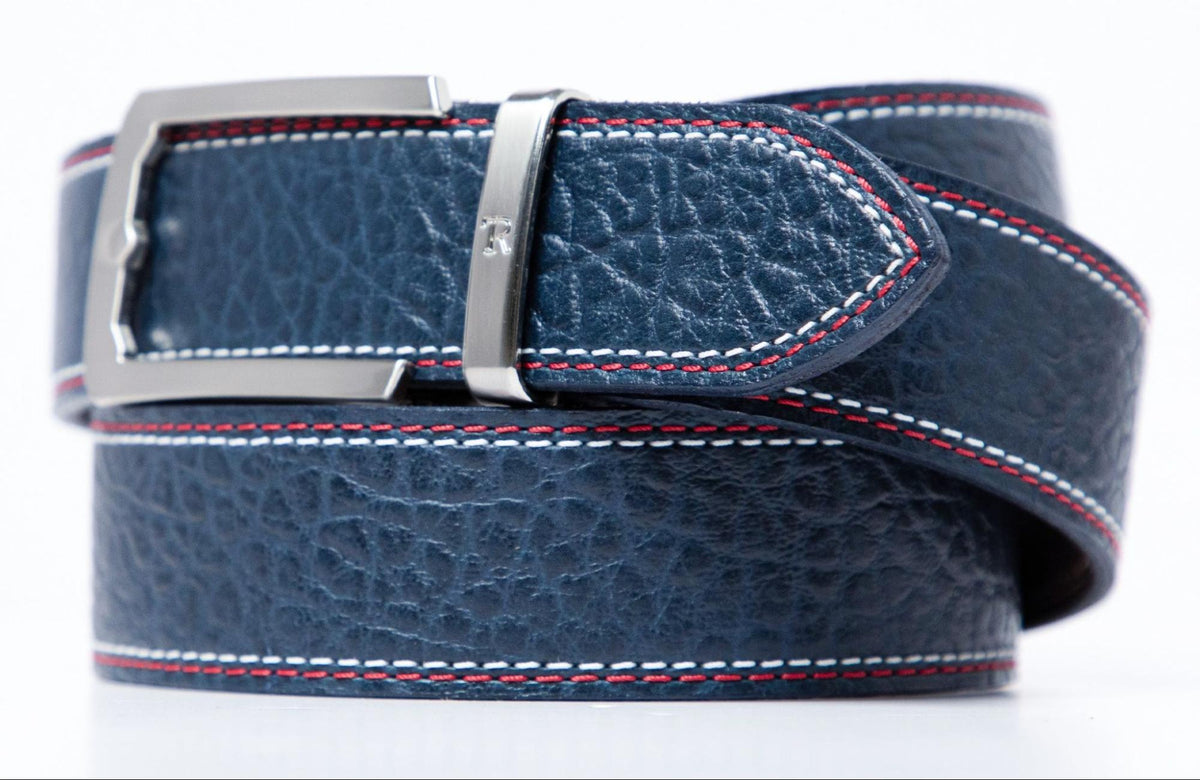

Full Grain vs. Top Grain Leather Belts

A full grain leather belt sits at the top of the quality ladder—yet most men have never actually heard it explained. When you're standing at a display or scrolling through product pages, leather grade is the single most important quality indicator on any belt. And almost nobody talks about it clearly.
Why Leather Grade Is the Detail That Changes Everything

The price on a belt tag tells you almost nothing about how it will hold up in five years. Two belts can cost the same and look identical on day one—yet one will crack and peel while the other develops a rich, deep character that only gets better with age.
That difference comes down to leather grade. Grade refers to which layer of the hide was used and how it was processed. Once you understand the grades, you'll never look at a leather belt the same way again.
What Is Full Grain Leather?
|
Quick Definition: Full grain leather is leather made from the outermost layer of the hide with its natural grain left intact. Because it isn't sanded or buffed, it's known for exceptional durability, natural character, and the ability to develop a rich patina over time. |
Full grain leather comes from the outermost layer of the animal hide—the surface that faced the world. Nothing is sanded off. Nothing is buffed smooth. The natural grain, pores, and small marks from the animal's life remain intact.
That untouched surface is what makes full grain leather one of the strongest and most durable types of leather available. The fiber structure is densest near the outer surface of the hide, and preserving that layer maintains its natural strength. The result is leather that is more resistant to wear and moisture than many other leather types, develops a rich patina over time, and can last for decades with proper care.
The Natural Surface That Only Gets Better With Age
Over time, full grain leather absorbs the oils from your hands and skin, developing what craftsmen call a patina—a rich, darkened sheen that comes from use rather than manufacturing. No two full grain belts age the same way.
For the man who pays attention to details others miss, that's the whole point. A full grain exotic leather belt isn't just an accessory you put on in the morning. It becomes distinctly yours. The small variations in the natural grain aren't flaws—they're evidence of quality.
What Is Top Grain Leather?
|
Quick Definition: In most consumer products, top grain leather refers to leather from the upper layer of the hide that has been lightly sanded and finished for a smooth, consistent appearance. It's durable, easy to maintain, and more stain-resistant than full grain, but it develops less patina over time. |
Top grain leather also comes from the upper layer of the hide, making it one of the highest-quality leather types available. The difference is that the surface is lightly sanded or buffed to remove natural imperfections, then finished with a protective coating to create a smooth, consistent appearance.
The result is a cleaner, more uniform look than full grain leather. Because part of the natural grain has been removed, top grain leather is generally a bit less durable and won't develop the same rich patina over time. However, the protective finish often makes it more resistant to stains and easier to maintain.
In consumer product descriptions, "top grain leather" usually refers to grain leather that has been lightly sanded or buffed to remove natural imperfections before receiving a protective finish. Technically, however, full grain leather is also a type of top grain leather because it comes from the grain side of the hide.
Consistent, Refined, and Widely Used in Premium Belts
Top grain is the most common grade you'll find in mid-to-premium leather belts. Brands use it because it produces a polished, predictable look across an entire product line without much variation. That's not a compromise—it's a deliberate choice for a different use case. If you want a sharp, clean belt that holds its appearance without much maintenance, top grain does exactly what you need.
Full Grain vs. Top Grain: Side-by-Side Comparison
|
Feature |
Full Grain Leather |
Top Grain Leather |
|
Durability |
High - dense fiber structure intact |
Very good - slightly reduced by sanding |
|
Appearance |
Develops rich patina; becomes unique |
Uniform appearance; minimal patina |
|
Texture |
Natural grain, pores, and marks visible |
Smooth, buffed, and finish-coated |
|
Price Point |
Higher - especially in exotic styles |
Mid-to-premium range |
The trade-off is straightforward. Full grain wins on long-term character and durability. Top grain wins on uniform appearance and stain resistance. For a leather belt you plan to rotate regularly, either grade is a solid choice—but if you want something that genuinely keeps getting better, full grain is in a category of its own.
What About Split Leather and PU Backing?
Below the top layer of the hide sits the split—the fibrous underlayer separated during processing. Split leather is genuine leather, but it comes from a structurally weaker part of the hide with a looser fiber structure.
To give split leather a finished surface and added rigidity, manufacturers often bond a layer of PU (polyurethane) to the back or face. This is a standard, widely used construction method that produces a consistent-looking belt at a more accessible price point. Many well-known brands use it across their mainstream lines.
Being honest about this matters. Plenty of brands describe their products as "genuine leather" without ever specifying the grade. For a full breakdown of what to look for across every construction type, our ultimate style and care guide covers everything you need to know.
Which Nexbelt Styles Use Full Grain Leather?

Not every Nexbelt is full grain leather. Only Nexbelt's exotic styles—the crocodile leather belt and alligator leather belt collections—use genuine full grain construction. Every other Nexbelt style uses split leather with a PU backing.
These exotic styles represent Nexbelt's highest tier of leather quality, where the natural grain of the hide is preserved entirely, and the texture, scale pattern, and patina potential set them apart from anything in the standard dress belt category.
How to Choose the Right Leather Grade for Your Belt
The best men's belt isn't automatically the one made from the most expensive material. It's the one that fits what you actually need.
Here's a quick guide:
- You want a belt that ages beautifully and lasts decades: Choose a full grain exotic style—the crocodile or alligator leather belt options from Nexbelt's exotic collection.
- You want a clean, consistent leather belt at a solid price point: A top grain or split leather belt with PU backing performs well and holds its look over regular use.
- You want the precision fit of a ratchet belt without the bulk of a traditional buckle: Nexbelt's ratchet belt system works across both construction types, so you're not sacrificing fit for material.
The best leather for your belt will be the grade that matches how you live and what you expect from something you wear every day.
Browse Nexbelt's American Leather Collection—Built for Men Who Refuse to Compromise on Quality

Nexbelt's American-made leather collection is built for men who consider every detail—from the leather grade to the precision of the fit. Browse the full range of American-made leather belts, including Nexbelt's exclusive exotic styles, and find the belt that meets your standard.
Frequently Asked Questions
Are all Nexbelt leather belts made from full grain leather?
Only some belts are full grain. Nexbelt has many styles that use split leather with a PU backing. Only the exotic crocodile and alligator styles utilize full grain leather—and these are not part of the Rowland Thomas line.
What is full grain leather?
Full grain leather is the outermost layer of an animal hide, processed without sanding or buffing the surface. It retains the natural grain, pores, and markings of the original hide, which gives it the densest fiber structure and the highest durability of any leather grade. It also develops a patina over time that makes each piece unique.
What is top grain leather?
Top grain leather comes from the same upper layer of the hide as full grain, but the surface is lightly sanded to remove natural imperfections before a finish coat is applied. The result is a smoother, more consistent appearance. It's a genuinely premium material—just slightly less durable over the long term than full grain due to the surface processing.
What is the difference between genuine leather vs. full grain?
"Genuine leather" is a broad term that simply means the product contains real animal hide—it says nothing about grade or quality. Full grain is a specific, top-tier grade of genuine leather. Split leather with PU backing is also technically genuine leather. When a brand says "genuine leather" without specifying the grade, that's worth noting before you buy.
What makes a crocodile or alligator leather belt worth the price?
A crocodile leather belt or alligator leather belt uses full grain exotic hide, which means the natural scale pattern, density, and grain are completely preserved. Exotic hides are rarer, harder to source, and require more skilled craftsmanship to work with properly. The result is a belt with exceptional durability, a distinctive texture, and a patina that develops in a way no standard leather belt can replicate.
What is a ratchet belt, and does leather grade affect how it works?
A ratchet belt uses a track-and-tooth mechanism along the belt strap instead of traditional punch holes, allowing for micro-adjustments in fit rather than fixed notch positions. The ratchet system works the same way regardless of leather grade—you get the same precision fit from a split leather ratchet belt as from a full grain exotic style. The leather grade affects durability and aging, not the mechanism's performance.
How do I care for a full grain leather belt?
Full grain leather benefits from occasional conditioning with a leather cream or oil to keep the fiber structure supple and support healthy patina development. Avoid prolonged exposure to water, and store the belt flat or rolled rather than folded sharply. Because full grain leather lacks the surface coating that protects top grain, conditioning matters more—but it also responds more visibly and beautifully to proper care.

Written by Pod5 National Positions