
Why Ratchet Belts Outperform Buckle Belts — A Nexbelt Perspective

A belt should hold your pants comfortably without making you choose between a notch that pinches and one that slips. Traditional pin-and-hole belts offer only a handful of fixed settings. Nexbelt replaces those holes with a hidden track and a buckle that locks into place in ¼-inch increments. Here’s what that means for fit, everyday use, and appearance.
How Does a Traditional Buckle Belt Work?
A conventional belt has a row of holes in the strap. To fasten it, you pull the strap through the buckle and insert a pin into one hole. The holes are commonly spaced about an inch apart, so the next setting can make a noticeable difference. Repeated pulling at a favorite hole may also leave that spot stretched or creased over time.
This design is familiar and straightforward. Its limitation is that your fit is determined by where the holes happen to be, even as your clothing and comfort needs change during the day.
What Is a Nexbelt Ratchet Belt?

A Nexbelt ratchet belt has no punched adjustment holes. A toothed track sits on the underside of the strap, where it is hidden while the belt is worn. Inside the buckle, a small locking component called a pawl catches the teeth. As you feed the strap through, you hear and feel it click into the next position. The teeth hold the strap against movement in the loosening direction until you operate the buckle’s release.
Nexbelt’s PreciseFit™ system uses a hidden ratchet track with adjustment points every ¼ inch. That gives you four settings within the distance between two holes spaced an inch apart. You can settle on a closer fit without punching a new hole or leaving the pin between settings.
Ratchet Belt Tooth Counts by Belt Type
Nexbelt’s ratchet track has different tooth counts depending on the strap type:
- Ribbon and canvas straps: 25 teeth
- Braided belts: 32 teeth
- Golf and dress leather belts: 40 teeth
- EDC belts: 48 teeth
What Does “Micro-Adjustable” Mean for Your Belt?
Micro-adjustable means you can change the circumference in small, repeatable steps. On a Nexbelt, each click advances the strap by ¼ inch. You might snug it one click before a walk, then release a click or two when sitting down or after a meal. Small changes are useful when the belt needs to accommodate a tucked shirt, different pants or gear at your waist.
The track and buckle do the work together:
- Slide the strap into the buckle. The hidden teeth enter the buckle and meet the pawl.
- Tighten one click at a time. The strap moves forward through the buckle; the pawl catches at each ¼-inch position.
- Stop where it feels right. The engaged tooth holds the setting without a pin pulling against a hole in the strap.
- Use the release to loosen or remove it. Depending on the Nexbelt buckle, rotate its release lever or press its release button, then slide the strap back. If the strap is under tension, pushing it in slightly first can make the release easier to operate.
The release design varies by model, so check the buckle on the belt you choose. In either version, the point is the same: you can change the setting without unthreading the entire belt or forcing a pin out of a tight hole.
Two Kinds of Custom Fit: Strap Length and Daily Adjustment
Nexbelt’s cut-to-fit sizing system lets you trim the strap to your length before securing it in the buckle. That initial cut determines the belt’s overall length and how much strap extends past the buckle. The ratchet track then provides the ¼-inch adjustments you use each day. Cutting the strap and adjusting the buckle are separate steps: trim carefully using the instructions for your model, then use the clicks to fine-tune the fit as you wear it.
Ratchet Belt vs. Buckle Belt: The Fit Difference
With a hole belt, you may need to accept one setting that feels a little loose or move to the next hole and feel squeezed. Nexbelt’s smaller steps let you respond to modest changes without making a full one-inch jump. That can matter on the golf course, through a workday or when carrying everyday gear.
|
Feature |
Traditional pin-and-hole belt |
Nexbelt ratchet belt |
|
Adjustment points |
Fixed holes, commonly about 1 inch apart |
Hidden ratchet track with ¼-inch steps |
|
How it fastens |
Pin goes through a strap hole |
Buckle pawl engages the track |
|
How it loosens |
Remove the pin and choose another hole |
Operate the model’s lever or push-button release |
|
Sizing |
Often purchased by belt size |
Strap can be cut to fit, following model instructions |
|
Visible adjustment wear |
Frequently used holes may stretch or crease |
No punched adjustment holes on the visible strap |
What About Durability and Appearance?

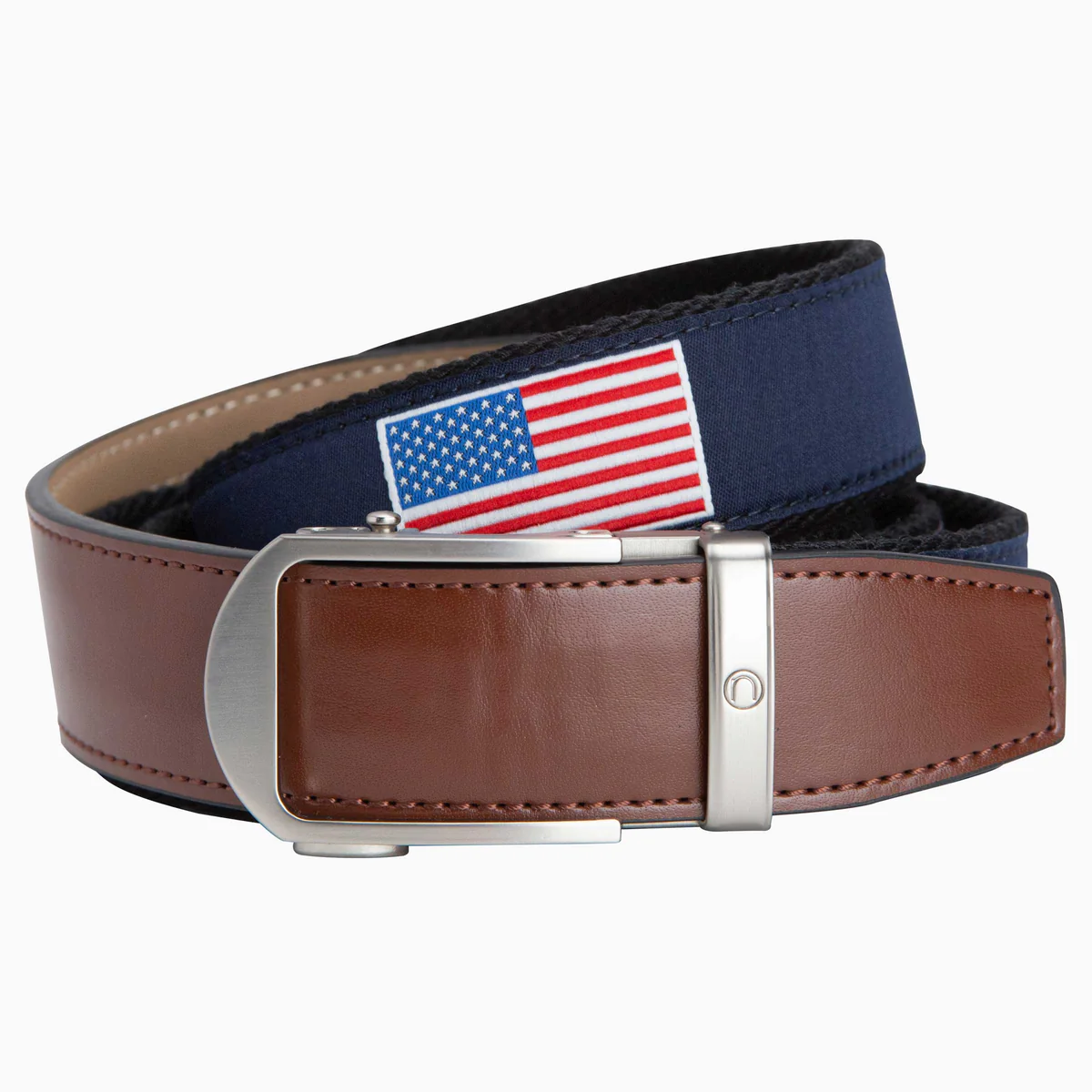
Because a Nexbelt has no punched adjustment holes, it avoids the concentrated wear that can form around a frequently used belt hole. Its track is on the underside, leaving the visible face of the strap uninterrupted. The buckle mechanism still needs to work properly, and a belt’s lifespan also depends on the strap material, construction and care. The advantage of the ratchet design is a different way to fasten and adjust it, with less tugging at a single point in the visible strap.
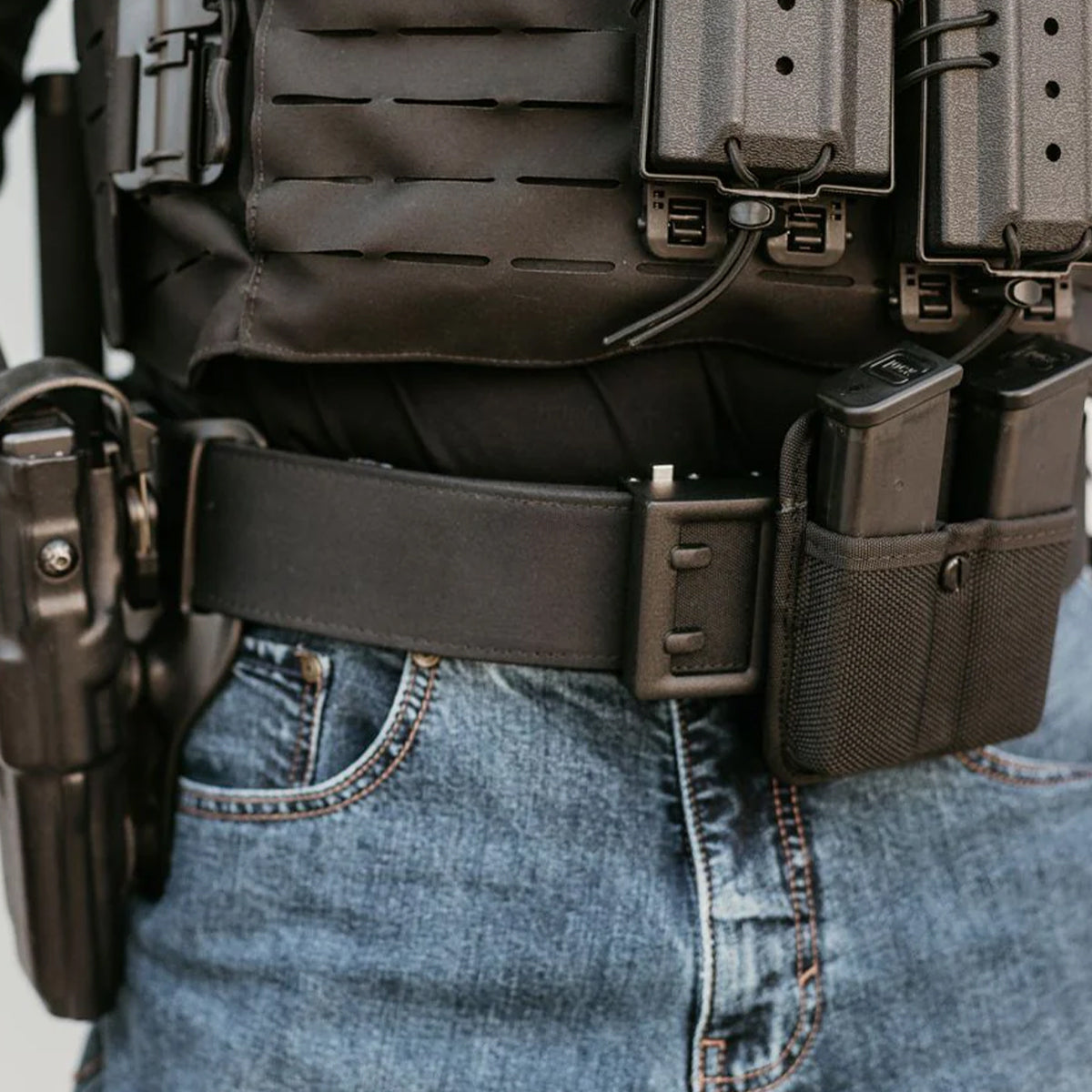
Nexbelt offers golf, dress and EDC options. Select the strap and buckle suited to how you plan to wear the belt; the underlying micro-adjustable fit makes sense well beyond one outfit or activity.
Is a Micro-Adjustable Belt Worth the Switch?

If your usual belt lands between two holes, a Nexbelt gives you more control. The hidden track and pawl create secure ¼-inch settings, the release lets you change them, and the cut-to-fit strap lets you set the overall length. Together, those mechanics make a practical difference each time you put the belt on.
Explore Nexbelt belts to find a style and release design that fits your routine.
Frequently Asked Questions
What does micro-adjustable mean on a Nexbelt?
It means the belt can be tightened in ¼-inch increments instead of jumping between holes that are commonly about an inch apart. Nexbelt’s hidden ratchet track engages with the buckle to hold the setting you choose.
How do I tighten a Nexbelt ratchet belt?
Feed the strap through the buckle and pull it forward. As the teeth in the hidden track engage with the buckle, you’ll feel or hear each click. Stop when the belt feels comfortably secure.
How do I loosen or take off a Nexbelt?
Use the release on your buckle: some Nexbelt styles have a lever, while others have a push button. If the strap is tight, push it slightly farther into the buckle before operating the release, then slide it back to loosen or remove it.
Do I need to know my exact belt size before ordering?
Nexbelt straps are designed to be cut to fit. Follow the sizing instructions for your specific belt and trim conservatively before securing the strap in the buckle. The ratchet track then lets you fine-tune the fit each time you wear it.
Will the micro-adjustable track show when I wear the belt?
No. The track sits on the underside of the strap, so the outward-facing side has a clean look without visible adjustment holes.